English for Science, Space and the Environment — The Words Behind the Headlines
The vocabulary that runs through every documentary, climate report and space story — and the small set of structures for saying how certain something is.

Victoria C.
Methodology lead, English Era Studio
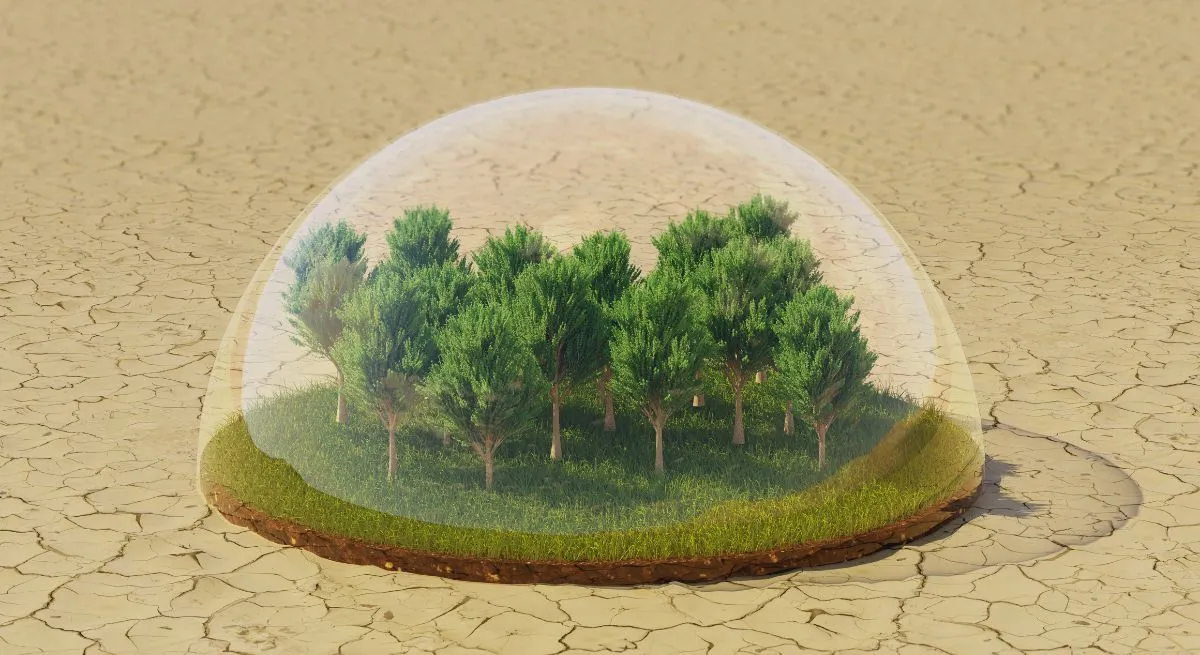
This is the English of anything you'd watch a documentary about, and it shows up in far more places than "science" suggests: news, exam essays, a podcast, an argument about recycling, the article a colleague sends you.
It's also unusually learnable, because it's built from a small number of repeating word-parts and one grammar habit that nothing else teaches.
The habit: saying how sure you are
This is the real skill, and almost nothing else in English uses it as heavily. Scientific and journalistic English grades its confidence very precisely, and reading the grade is how you tell a finding from a guess.
| Strength | Language |
|---|---|
| Certain | The data show that… / It is established that… |
| Likely | The evidence suggests… / It is likely that… |
| Possible | It may be that… / This could indicate… |
| Weak | It is possible, though unproven, that… |
| Disputed | Some researchers argue… / It remains contested |
Compare:
- Dogs understand human emotion.
- There's growing evidence that dogs respond to human emotional cues.
The second is what a careful source says, and learning to produce it is what makes writing sound educated rather than merely correct. It's also, incidentally, what exam markers reward. Can Dogs Read Your Feelings? is built on exactly this kind of science writing at A2–B1, where the hedging first becomes necessary.
Climate and environment
The vocabulary that runs through every report:
| Word | Means |
|---|---|
| emissions | Gases released, usually CO₂ |
| carbon footprint | Total emissions caused by a person or activity |
| renewable | Wind, solar, hydro — won't run out |
| fossil fuels | Coal, oil, gas |
| sustainable | Can continue without exhausting resources |
| biodiversity | The variety of living things |
| habitat loss | Destruction of where species live |
| offset | Compensate for emissions elsewhere |
| net zero | Emitting no more than you remove |
| greenwashing | Pretending to be environmentally responsible |
Useful verbs: to cut, reduce, phase out, scale up, roll out, tackle, mitigate, adapt to.
And the collocations, which matter more than the individual words: tackle climate change, cut emissions, phase out coal, raise awareness, a carbon-neutral economy, extreme weather events.
"Greenwashing" is worth learning properly — it's recent, common, and there's often no direct equivalent in other languages. The Environment & Climate Change covers this whole field at B1.
Space
| Word | Means |
|---|---|
| orbit | The path one body takes around another |
| eclipse | One body blocking light from another |
| totality | The phase of a total eclipse when the sun is fully covered |
| gravity / gravitational pull | The attraction between masses |
| atmosphere | The gas layer around a planet |
| launch / lift-off | Leaving the ground |
| probe / rover | Unmanned craft; the one that drives on a surface |
| light-year | A distance, not a time |
| habitable | Capable of supporting life |
"Light-year" is the classic trap — it sounds like a period of time and is a measure of distance. Getting it wrong in an essay is a very visible mistake.
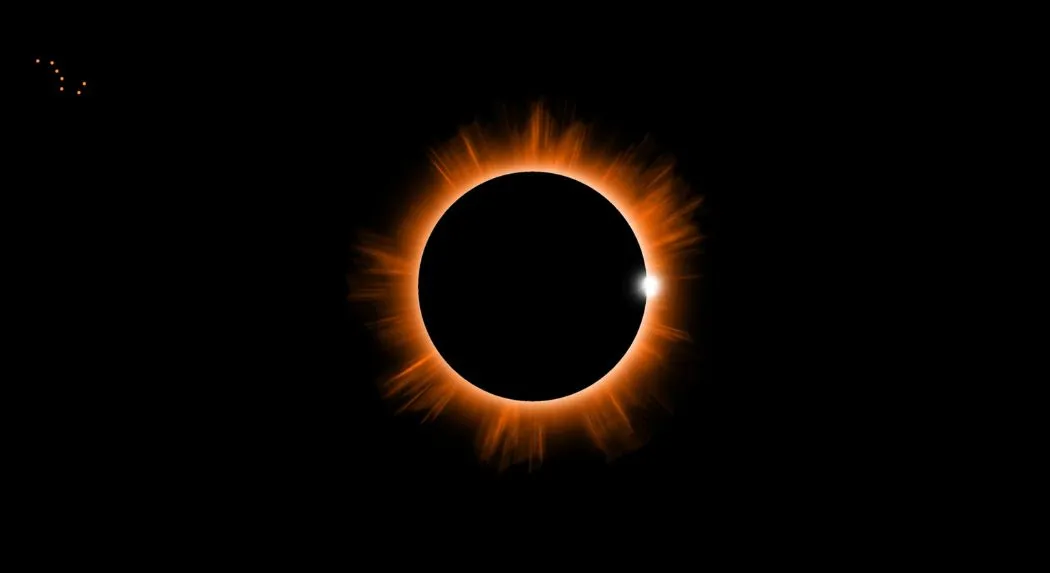
Two courses live here: Chasing the Shadow: The 2026 Total Solar Eclipse at B2–C1, and Project Hail Mary: English from Space, which takes the vocabulary through a story rather than a glossary.
Word-parts that unlock hundreds of words
This is the highest-value thing on the page. Scientific English is largely assembled from Greek and Latin pieces, so learning about fifteen of them lets you decode words you've never met.
| Part | Means | Examples |
|---|---|---|
| bio- | life | biology, biodiversity, biofuel |
| geo- | earth | geology, geothermal, geography |
| hydro- | water | hydrogen, hydroelectric, dehydrated |
| thermo- | heat | thermometer, thermal, geothermal |
| astro- / cosmo- | star / universe | astronomy, astronaut, cosmic |
| photo- | light | photosynthesis, photon, photograph |
| -logy | study of | ecology, geology, meteorology |
| -meter | measuring device | thermometer, barometer |
| micro- / macro- | small / large | microscope, microplastics, macroeconomics |
| re- | again | renewable, recycle, regenerate |
| de- | remove | deforestation, decarbonise, dehydrate |
| -able | can be done | sustainable, habitable, recyclable |
Meet deforestation for the first time and you don't need a dictionary: de- (remove) + forest + -ation (a process). Most of this vocabulary is like that, and most learners never notice.
Talking about data
For essays, presentations and exams:
- The figure rose sharply between 2010 and 2020.
- Emissions have fallen by around twelve per cent.
- There's been a steady decline since…
- The trend has levelled off.
- Roughly a third of respondents said…
- Correlation isn't causation — the two things happen together, but…
Direction verbs: rise, fall, increase, decrease, peak, plateau, level off, fluctuate. Adverbs: sharply, steadily, slightly, dramatically, gradually.
Why this vocabulary is worth the effort
Even if you never discuss science, this register is where formal written English lives. The hedging, the word-parts, the data language — they're what separates a B2 essay from a C1 one, and they're what makes news in English readable without stopping every second sentence.
Common questions
Why does scientific English use so many hedging phrases?
Because it grades how certain a claim is. "The evidence suggests" and "it is established that" mean different things, and reading that difference is how you tell a finding from a guess. Producing it is also what makes writing sound educated rather than merely correct.
What does "net zero" actually mean?
Emitting no more greenhouse gas than you remove from the atmosphere — not emitting nothing. "Carbon neutral" is used similarly. "Offsetting" is compensating for your emissions by paying for reductions elsewhere.
Is a light-year a measure of time?
No — it's a distance: how far light travels in a year. It's one of the most common mistakes in science writing by learners, and a very visible one in an essay.
What's the fastest way to learn science vocabulary in English?
Learn the word-parts rather than the words. About fifteen prefixes and suffixes — bio-, geo-, hydro-, thermo-, photo-, -logy, -meter, de-, re-, -able — let you decode hundreds of terms you've never seen. "Deforestation" needs no dictionary once you know "de-" means remove.
What does greenwashing mean?
Presenting a company or product as environmentally responsible when it isn't — marketing rather than substance. It's a recent term with no direct equivalent in many languages, and it appears constantly in climate coverage.
Where to start
The Environment & Climate Change is the B1 course on the vocabulary you'll meet most often, and the natural place to begin.
For space, Chasing the Shadow: The 2026 Total Solar Eclipse works at B2–C1 and Project Hail Mary: English from Space teaches the same register through a story. If you want a gentler entry into science writing, Can Dogs Read Your Feelings? covers real research at A2–B1, hedging included.
Practise this
Turn this into actual practice
Reading about English is a start. These mini-courses make you use it — with exercises that check your answers as you go.

Keep reading
- English for Beginners — The First Structures That Let You Say AnythingSix patterns that cover most of what a beginner needs to say. Learn these before any vocabulary list, because they're the frames everything else slots into.
- Football English — The Vocabulary for Watching, Playing and Arguing About ItCommentary phrases, the words fans actually use, British and American differences, and the football idioms that turn up in business meetings.
- How to Describe People in English — Appearance, Personality and TactThe word order nobody teaches, the difference between slim and skinny, and which descriptions are fine to say out loud.